Showing posts with label dreams. Show all posts

How to Dream the Future Precognitive Dreams Premonitions

Being able to foresee an unfortunate fact of life like death, disasters, illnesses, etc. through a dream is very common. Anyone may dream of something good or bad happening to someone else or even to themselves. Do dreams serve as a premonition?

Before we proceed in answering the question, let me first give you the definition of premonition and dreams. Based on dictionary meaning a PREMONITION is a presentiment of the future; or a warning in advance while a DREAM is a series of images, ideas, emotions, and sensations occurring involuntarily in the mind during certain stages of sleep; a wild fancy or hope or a reverie.


Let us first talk about dreams. We all know that dreams do play a role in our daily lives. The majority of people pay little attention to dreams. Dreams can help us find solutions to our daily problems and see things from a different perspective. Whenever we are dreaming, we can be who or what we want to be, regardless of the fact that in real life, sometimes it cannot be. Dreams have their own interpretation, like for example when you dream about loose, rotten, or missing teeth, it indicates that a family member or close friend is very sick or even near death. You can learn of your dream’s meaning through a Dictionary of Dreams.

Now, what about premonitions? As defined earlier, it may be a warning in advance. A lot of people have had premonitions in different types of situations. When we say premonition, it is conveyed through dreams. A certain foreboding of what will happen in the near future but in a vague sense. Many cases of premonitions were documented like the disaster when Titanic sank and killed a lot of people, wherein there were fifty counts of premonitions. Some of the passengers who had a premonition cancelled their tickets before riding the Titanic, were saved from the horrible disaster that took place in 1912.


Do dreams serve as a premonition?

Well, it actually depends on the dream itself. If a person dreams about the whole scenario of an event, it can or may happen in the future. Yet, in another view, it can be just a dream that he had had but has a different significant meaning for it. A dream can serve as a premonition yet at the same time it also cannot be.

We could say that a dream served as a premonition when the dream itself foretold something that could happen in real life. But, if your dream was something out of a grandiose anticipation of what you have been thinking of, it may be just from your subconscious mind. My answer to the question “Do dreams serve as a premonition?” is IT DEPENDS, whether the dream you had has something to do with what could happen or maybe just out of a wishful thinking sense that your subconscious mind revealed through a dream.

Dream Interpretation: What do our Dreams really mean?


The interpretation of dreams by dream experts may be almost as old as dreaming itself.  We know that all humans, and many animals, dream every night, and humans have always been fascinated to learn what causes dreams and what they mean.

The interpretation of dreams dates back at least as far as 3000-4000 B.C.  We know that because the interpretations of dreams were recorded in permanent form on clay tablets.  It is thought that many primitive peoples were unable to initially distinguish between the real world and the dream world.  In many cases, these people looked upon the dream world as an extension of the physical world around them, and in many cases they saw the dream world as more powerful than the waking one.

Dream interpretation was such an important field to the ancient Greek and Roman world that dream interpreters often accompanied generals and other military leaders into battles.  Dreams were taken extremely seriously, and the Greeks and Romans in particular often viewed dreams as messages sent by their gods.


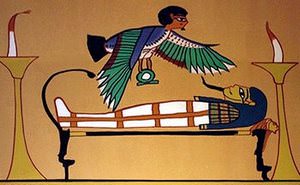
Dreams also had a religious content in ancient Egypt, and priests their doubled as dream interpreters.  Dreams were among the items recorded by the ancient Egyptians in the form of hieroglyphics.  Those whose dreams were especially vivid or significant were thought to be blessed and were given special status in these ancient societies.  Likewise, people who were able to interpret dreams were thought to receive these gifts directly from the gods, and they enjoyed a special status in society as well.

There are over 700 mentions of dreams in the bible, and people in biblical times saw dreams as very significant.  Dreams and their interpretations are mentioned in many of the most significant books of the bible and other holy scriptures.

In many cases, dreams were often seen as a form of prophecy.  People often interpreted their dreams as omens or warnings, and adjusted their activities accordingly.  Dreams were often thought of as omens from deities, as messages from spirits, or as messages from departed souls.  In some cases, dreams were even seen as the work of demons, meant to confuse and trouble the dreamer.

Dreams were so important that they often dictated the actions of political and military leaders, affecting everything from the prosecution of a battle to the outcome of a political decision.  Dreams were also thought to provide vital clues to healers, and they were used in the diagnosis and treatment of all manners of illness.

Dreaming was often looked upon by indigenous peoples as a way to commune directly with gods and spirits, and dreams are still used in this way by cultures around the world.  Many people believed, and some still do, that during dream sleep the soul leaves the body and communes with the spirit world.

The Chinese were one culture who believed that the soul left the body each night during dream sleep.  They believed that if the dreamer were suddenly awakened the soul may not be able to return to the body.  That is why some Chinese are still leery about the use of alarm clocks.  This is just one example of how ancient legends can linger into the modern world.

Some Mexican and Native American societies share this ancient view of the importance of dreams, and share the belief in a separate dimension that is visited during dream sleep.  These people believed that their departed ancestors lived in their dreams, and that they were able to take forms like animals and plants. Thus dreams were seen as a way for them to commune with their recent and ancient ancestors, and to gather wisdom and knowledge that would serve them in their waking lives.  Dreams were also seen as ways to gather information about their purpose or mission in life.


The respect for dreams changed radically early in the 19th century, and dreams in that era were often dismissed as reactions to anxiety, outside noises or even bad food and indigestion.  During this period of time, dreams were thought to have no meaning at all, and interest in dream interpretation all but evaporated.  This all changed, however, with the arrival of Sigmund Freud later in the 19th century.  Sigmund Freud stunned the world of psychiatry by stressing the importance of dreams, and he revived the once dead art of dream interpretation.


How to Lucid Dream Control your Dreams and Manipulate your Dreaming Experience

In a Lucid dream you are no longer bound by the laws of space or time.

Have you ever wondered How to Lucid Dream? Ever wished that you were able to control or manipulate your dreams? We have found that Lucid dreaming is an ideal place to train your psychic powers as you are not restricted by the laws of time and space. However, Lucid dreaming is not just for those with psychic abilities. Its something we can all do, and something I would strongly suggest as it is one of the most fun and enjoyable, life changing experiences you can have.

For me, the most important thing about lucid dreaming is that you, the dreamer, must be able to distinguish between being awake and being in the dream state. 

We've all had experiences where we've awoken from a dream and felt "that was so real" or later in the day have been unable to decide whether something you experienced was real or in that dream state. I have in the past woken up from a dream, in which my wife has been horrid to me and I have felt actual anger towards her lying there sleeping because the dream I just had felt so realistic, conversely sometimes I hear my phone alarm go off during the day and think "I better not be asleep right now!"

So how do you know if you are dreaming? Well the cliched method is to pinch oneself. The logic being that in the dream world you won't experience the physical pain that you would whilst being awake. However how do you remember to check whether your in a dream state whilst you are dreaming. If your subconscious mind is in control of what you are seeing, hearing, sensing and thinking how can you control that consciously?

Obviously the key is to make this process of testing whether you are awake into a subconscious one. There are countless things we do subconsciously without even realizing, both in the dream state and whilst awake, things such as breathing, regulating heart rate, or digestion. If you are able to make it so that you subconsciously check which reality you are experiencing every so often, eventually you will find yourself doing this in a dream state.

And what an eye opener it is the first time it happens to you. The moment you become conscious in a dream state for the first time is incredible, its literally like being god. You are able to manipulate your physical environment, you can fly, you can transform, anybody you want can be there and you can do whatever you want, however you want. If you can imagine it you can do it. What could be more kick ass than that?

Guide to Interpreting Dream Explanations / Edgar Cayce and The Quest for the Dream Dictionary.


As well as the abilities to see the future in his own precognitive dreams, The multi talented 'American Prophet' Edgar Cayce was able to interpret dreams of others. Cayce was able to tell predict peoples future based on the content of their dreams. Cayce argued that the unconscious mind has access to information that the conscious mind does not.

Carl Jung would certainly agree with Cayce that the unconscious mind was able to relay messages to the conscious mind whilst in a dream state and that images and symbols in the dream could represent things from the dreamers past, present or future. Jung argued that there was a single conscious 'higher mind' which could be what Cayce referred to as the Ashakic record. Jung also responsible for the concept of Synchronicity.

He wrote this short guide on how to see the future in a subconscious state.
  • Keep a notebook beside the bed. Record your dreams as soon as possible after waking.
  • Suggest to yourself every night as you fall asleep, “I will remember my dreams.”
  • If you wake during the night, write down the main symbols, and the entire dream will usually come back in the morning.
  • Practice keen observation in your dreams through self-suggestion prior to sleep.
  • Look for these components in your dreams: the setting, the people, the action, the color, the feeling, and the words.
  • Work on analyzing your dreams every day, otherwise their progression will be difficult to assess.
  • If dreams are illogical, three reasons are possible: (1) Only the fragments of the dream have been recalled.(2)The dream is reflecting something illogical in the dreamer’s life. (3) Mental blocks have erased your recall.
  • If you are unable to decipher an important dream, suggest to yourself, before your next sleep, that the dream repeat itself more clearly.
  • Nightmares, which bring with them an inability to move or cry out, usually indicate the wrong diet. To end the nightmarish dreams change your diet.
  • Dreams that are unchanged through the years indicate the dreamer’s resistance to change.
  • Dreams of ill health can be either literal or symbolic warnings.
  • When a problem confronts you, ask by prayer for guidance to be sent to you through your dreams.
  • Be practical in your interpretations. Always look first for a lesson. What have you refused to face or been ignoring?
  • Observe carefully recurrent dreams, as well as the serially progressive ones. These often illustrate progress or failure.
  • Dreams are the reaction of the inner self to daytime activity and often show the way out of the dilemma. So relate them to current activity, because dreams may be retrospective as well as prospective.
  • Dreams come to guide and help, not to amuse. They direct your attention to errors of omission and commission and offer encouragement for right endeavors. They also give us the opportunity to pray for others and to help them bear their burdens.
  • If you receive an unusual message, reduce it to common terms. See if the symbolism can be of help in interpreting the dream.
  • Look for past-life experiences in your dreams. These manifest themselves not only in color, but in the proper costume and setting of their period. They come to warn you against repeating the same old mistakes; to explain your relationship and reactions to certain people and places; to reduce your confusions; to enable you to better understand life.
  • Do not fear conversation with the so-called “dead” in dreams. If the communication is one-sided, it denotes telepathy. If both participate, it may be an actual encounter of bodiless consciousness.
  • Dreams are primarily about self. Only a few dreams relate to family, friends, and world events.
  • Watch for mental telepathy in dreams.
  • Remember, persistence is necessary to learn any new language, and dream symbols are the forgotten language of the subconscious.
  • Give daily thanks to God the universe for all things and use daily prayer to improve the quality and reception of your dreams.

-Edgar Cayce


Edgar Cayce


 “Dreams are today's answers to tomorrow's questions.” 
-Edgar Cayce

 Edgar Cayce was an American psychic, in the in the late 1800s and early 1900s, who allegedly possessed the ability to answer questions on subjects as varied as healing and wars, and had visions of the world ending. 

He would famously lie at the bottom of his bed in a "hypnotic like state" and dictate his prophecies. It was done in such a fashion because Cayce said he generally would not remember what he had said while in this state. His predictions are numerous and many of his prophecies have been exacted.

Some of his predictions are wild and yet still to occur, such as the recovery of the lost city of Atlantis, that information as to the whereabouts of the lost continent could be found in a secret compartment under the foot of the Sphinx in Egypt. Cayce also claimed a golden city would be discovered in the Gobi desert, with lifts, escalators and electric cars no less. 


We know from case studies of the other great psychics from history including, Helena Blavatsky and Michel de Nostradame, that trance work was used in their prophecies. In this trance like state Cayce was able to access the 'Akashic records' and reveal information from anywhere in the universe at any point in time. The Akashic record is described as containing all knowledge of human experience and all experiences as well as the history of the cosmos encoded or written in the very aether or fabric of all existence. The records, or The Book of Life in the Bible, are metaphorically on a non-physical plane described as a library.

So the big question for us now is how did Cayce enter this trance like state? how was he able to access the Akashic record and see into the past and/or future? how do we go about replicating this and doing it now today in our own homes?


Famous Psychics from History


In this article we are going to look at some of the most famous psychics that have ever lived. History is littered with famous psychics and stories about people with psychic powers can be found in a wide variety of cultures around the world. From ancient Babylon, Egypt, and Greece to Aborigines, Native Americans and Haitian Voodoo we can find stories of psychic feats from people who can see the future to people who can speak to the dead.

One of the earliest mentioned can be found in the bible. The story tells of a man named Joseph, who had what was known as a dream coat. In the story there are many examples of Joseph experiencing precognitive dreams and being able to predict the future. In his dream state he was able to see clues regarding the future. Some times these came in an abstract form and needed to be deciphered. His precognitive dreams included one showing the sun, moon, and eleven stars bowing down to him. He later went on to become a chief adviser for the Pharaoh of Egypt of that time.


In fact the bible has many references to psychics, for example Saul visited a spirit medium in order to contact the deceased former King Samuel. His advisers found him a woman medium who was able to summon the spirit of Samuel and communicate with him 'on the other side'. She was able to relay information from one to the other.

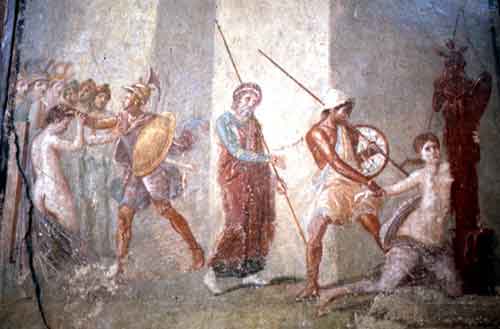
Psychics can also be found in ancient Greek literature, such as the story of Cassandra. She was a beautiful woman who refused the have sex with the God Apollo. He then cursed her with the ability to see the future. She foresaw the destruction of Troy (she warned the Trojans about the Trojan Horse, the death of Agamemnon, and her own demise.) However she was unable to do anything to forestall these tragedies since no one believed her prophecies.


In those days Psychics were a lot more respected than they are these days and often found themselves in import roles in the society. Nostradamus, the French clairvoyant was also an official adviser to Queen Catherine de Medici and famously told the queen that all of her sons would be kings but that she would herself outlive them all. This turned out to be true in every case but one.


Another famous psychic from history is Clairvoyant and spiritualist medium Madame Helena Blavatsky. Born in 1831 in Soviet Russia, Blavatsky after traveling the world, would eventually go on to establish a research and publishing institute called the Theosophical Society. Blavatsky defined Theosophy as "the archaic Wisdom-Religion, the esoteric doctrine once known in every ancient country having claims to civilization." She gained fame as spirit medium who was able to connect to the spirit realm and relay information from the other side. This included a bold prediction that the atom could be split, a theory widely lampooned in her time.


Edgar Cayce was an American psychic, in the in the late 1800s and early 1900s, who allegedly possessed the ability to answer questions on subjects as varied as healing and wars, and had visions of the world ending. He would famously lie at the bottom of his bed in a "hypnotic like state" and dictate his prophecies. It was done in such a fashion because Cayce said he generally would not remember what he had said while in this state. His predictions are numerous and many of his prophecies have been exacted.

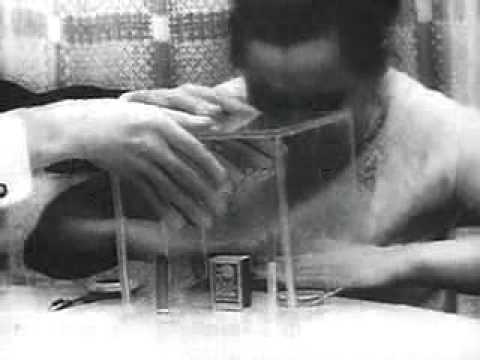
The final Psychic we are going to take a look at in this article is Nina Kulagina, she rather than helping a royal figure found her self working with the Soviet Union and the KGB. During the Cold War, silent black-and-white films of Russian psychic Nina Kulagina performing feats of telekinesis, appearing to move objects on a table with her mind, were produced. The film was recorded under controlled conditions by Soviet authorities. She's pretty bad ass and once she stopped the beating heart of a frog. Damn. That's against the second rule of Telekinesis. Never use your powers on living creatures!


There are countless examples of Famous psychics in history. As long as people have been writing they have been recording the accounts of mystics, soothsayers and prophets. From ancient Egypt to the modern day the ability to communicate with the other side and to see into the future has fascinated all of us.

DREAM DIARY: Day One.

What does this dream mean?

When I went to bed last night I cheekily thought to myself "I'll look out for some lottery numbers while Lucid dreaming tonight". After all if my theory is correct I should be able to use lucid dreaming for clairvoyance and precognition.

I hope and pray however that last nights dream was not one of the prophetic variety. The events that I saw were not something I would wish on anyone and I really hope this one is wrong. I have recently started keeping a dream diary as an experiment. I woke up this morning with just two fragments of the dream and immediately wrote them down.


The first image was of a woman leaning over to pick something up, perhaps a hat or shoe, before being decapitated by a fast moving vehicle, either a car or a train. I tried to shout to her to get out of the way but it was very noisy. There was lots of blood and needless to say the poor woman died. I distinctly remember the feeling or revulsion in my stomach the moment it happened. The second part was of a lilac colored piece of fabric, like a scarf or a sarong gracefully falling to the ground.

What does my dream mean? How are the two linked? Is my dream precognitive?- No idea.

How to Dream the Future - Precognitive Lucid Dreams


Many people have been asking me how to lucid dream and how to dream the future...


I have been reading An Experiment with Time by J. W. Dunne. An aeronautical engineer by trade Dunne first became interested in dreams and time because he would occasionally have precognitive dreams about major disasters which would later occur. Intrigued, Dunne proposed an experiment that anyone can do, you record your dreams over a set period and then look for corresponding news stories within 2-3 days.

So today I bought a new notebook and shall begin writing a dream diary. Dream diaries  are often used in the study of dreams and psychology. Many people tell me that they don't dream or that they struggle to recall what happened almost immediately after waking. If that sounds like you then you will be pleased to hear that keeping a dream diary is a useful catalyst for remembering dreams. It will also help you to recognize dreams while you are asleep, the key of how to lucid dream. Once you are able to become conscious in the dream world you are free to do whatever you want.


Dunne himself found a very high success rate when he tried this. A high percentage of his predictions and prophecies would could true. He proposed that our experience of time as linear is an illusion of human consciousness, and that in dreams our subconscious has simultaneous access to information in the past, present and future.  This doesn't surprise me, there is countless accounts of anecdotal evidence to support the theory of Precognitive dreaming.

There is a man in Scotland by the name of Chris Robinson, (you may have seen him on Stan Lee's Super-humans)  who uses this method of Lucid dreaming to accurately predict the future. Whilst in the dream state he observes what he can see and records his findings. This is what I shall try to replicate.

I shall run this experiment for the next 28 days.

Investigating the effects of Lucid Dreaming vs. Meditation

It all started out when I realised the french word for "lucid" is "clair" as in "clairvoyance". Clairvoyance literally translates as "clair" clear or lucid and "voyance" meaning vision.

I realised that the two may have some kind of link.

The effects of meditation are well documented. Neurologists have used the most up to date modern scientific techniques, such as fMRI and EEG, to see how their bodies and brain change. The effects of meditation can include changes in metabolism, heart rate, respiration, blood pressure and brain chemistry.

Similar effects are reported in dreaming, prayer and hypnosis. I am convinced their is a link, to do with accessing the subconcious mind.


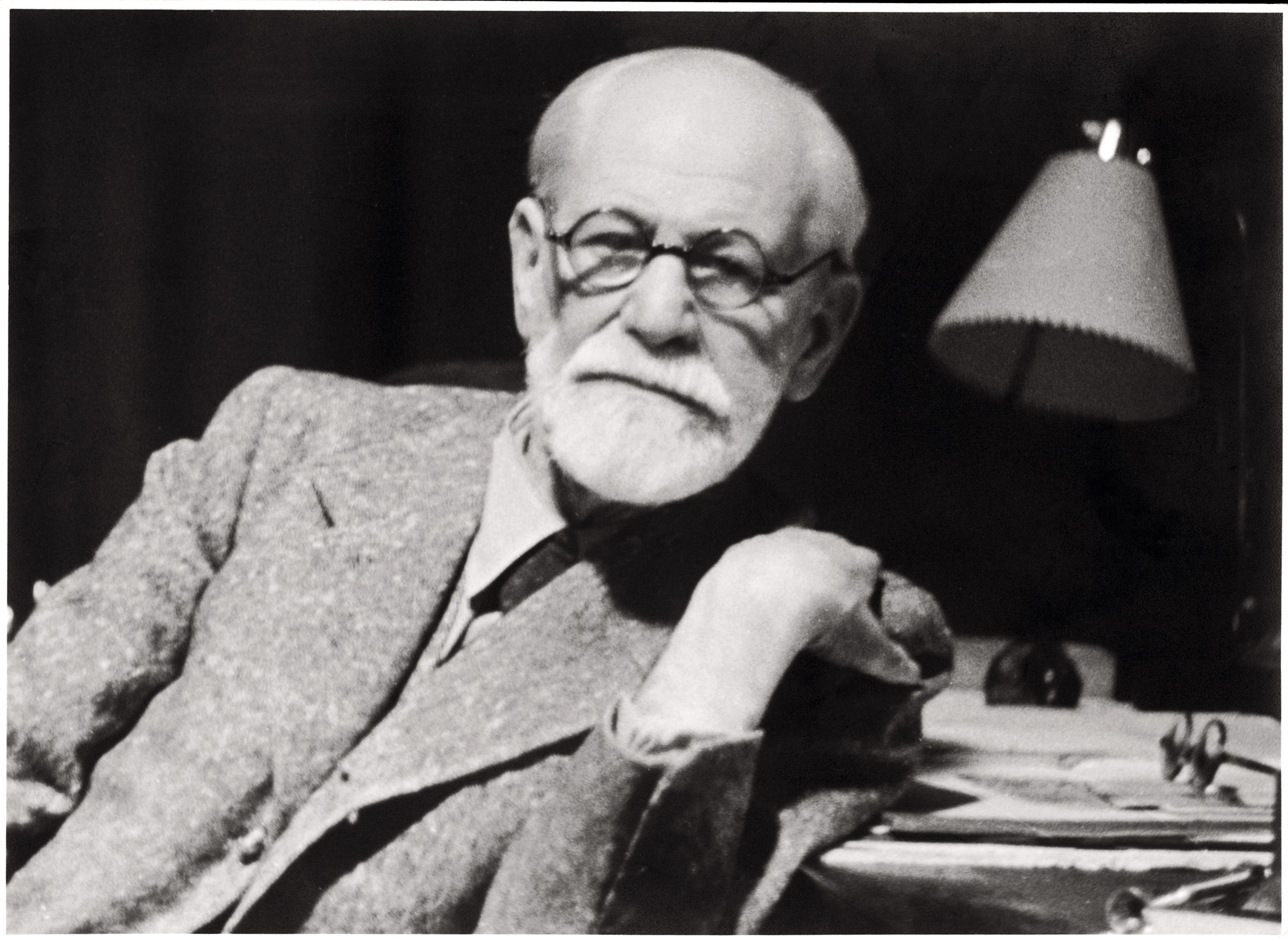
                                 Freud seen here smoking what only he would describe as 
                                                               a little brown willy.

Frueds model of the mind see's three distinct parts, the id, the ego and the super ego. The Id represents our primal, evolutionary drives; the need for food and sex. This is subconcious. The ego is representive of our more civilised, social, machiavellian mind. The part that knows how to manipulate our surroudnings to achieve our goals. Then finally. This is our conscious mind. The super ego is a doorway between the two parts, allowing certain ideas like "hunger" to filter through from the id to the ego to become "I'm hungry, I wonder how I can get food", while turning away less appealing thoughts such as "how can I sleep with my mother?"

Was Sigmund Freud right or was just "Sick-man Fraud"? I mean even the word psychoanalysis has anal right in the middle of it.

I deduce that this process of unlocking the subconcious mind is key to accessing your extra sensory abilities. We know from case studies of the great psychics from history including, Edgar Cacye and Michel de Nostradame, that trance work was used in their prophecies.


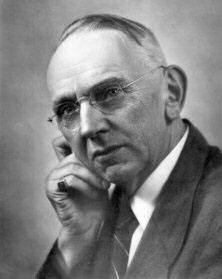
                                                       Edgar Cayce looking pensive.

Edgar Cacye would famously lie at the bottom of his bed in a "hypnotic like state" and dictate his prophecies. It was done in such a fashion because Cayce said he generally would not remember what he had said while in this state. His predictions are numerous and many of his prophecies have been exacted.

Cayce argued that the unconscious mind has access to information that the conscious mind does not.

And where better to explore the unconcious mind but in a lucid dream?